
Making our Voices Heard
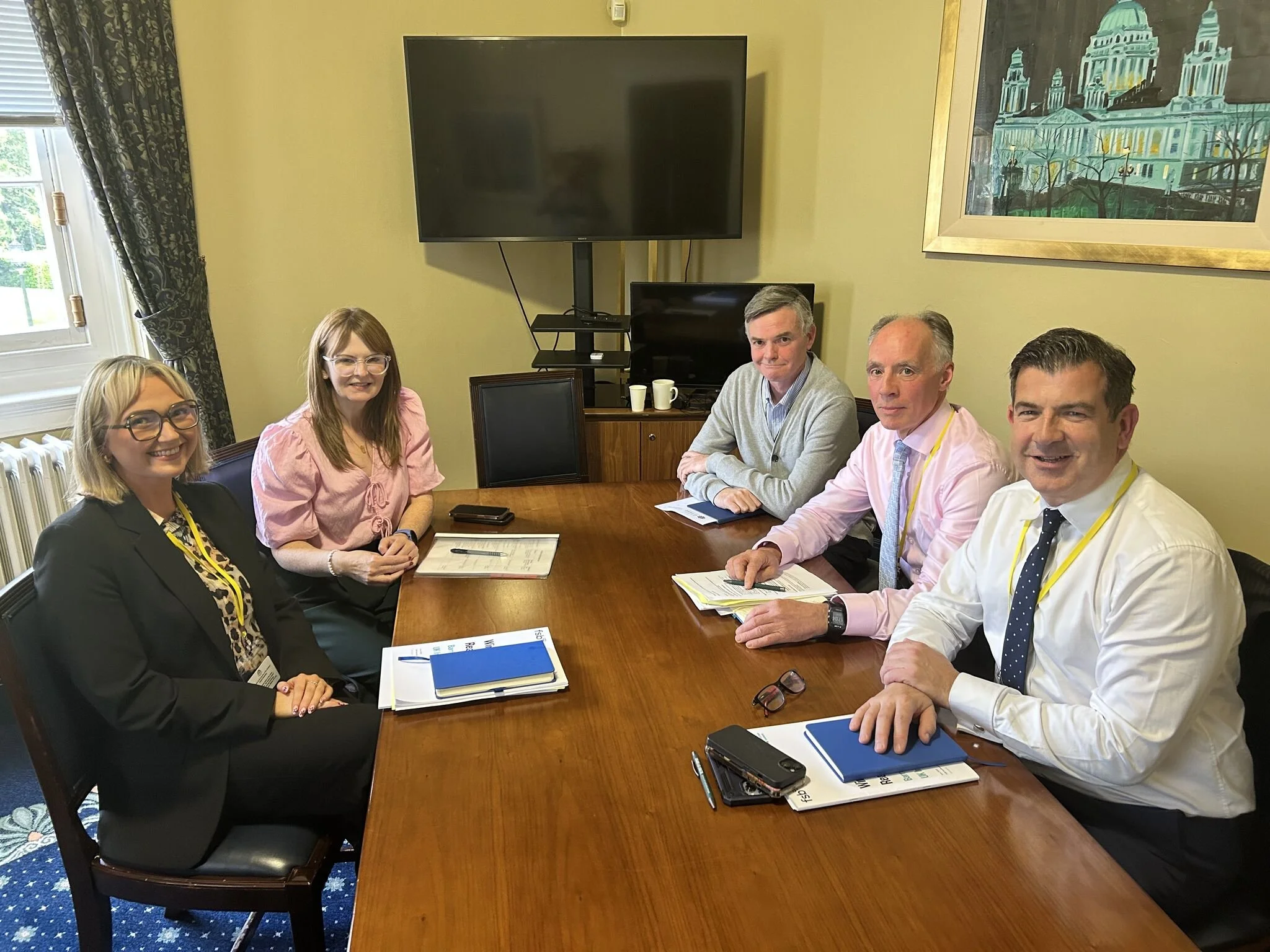
FSB Northern Ireland’s policy team engage with Economy Minister, Caoimhe Archibald on issues that are impacting members and SMEs
Graeme Weir, Membership Advisor Federation of Small Businesses explains why SME engagement with Stormont matters more than ever
As a new year begins, there is a familiar rhythm to public life in Northern Ireland - budgets are drafted, strategies refreshed and consultations launched. For many people these can feel remote or technical, something for politicians and civil servants rather than for everyday businesses. However, for small and medium-sized enterprises (SMEs), nothing could be further from the truth. These consultations are where public policy is shaped.
That is why FSB Northern Ireland is urging business owners and managers across Northern Ireland to engage, to speak up and to respond. We need to shape policy now, at the consultation stage, rather than trying to close the stable door after the horse has bolted.
In mid-January, Finance Minister John O’Dowd published a draft multi-year budget, alongside a consultation on the proposed 2026–2029/30 Budget. In launching it, he made clear that he wanted “to hear the views and ideas of workers, families, businesses and communities.” We should take him at his word. Budgets are not just spreadsheets; they are statements of priorities. They determine where investment goes, how services are funded and, critically for SMEs, what supports are developed and put in place for businesses.
SMEs are the backbone of the Northern Ireland economy. Collectively, small businesses employ more people than all large firms and the entire public sector combined. When policies help SMEs to grow, Northern Ireland prospers. When they hinder them, the impact is felt in jobs, wages, and local communities.
Right now, businesses are under intense pressure. From April, employment costs and other overheads are set to rise yet again. SMEs do not have deep pockets or armies of lawyers and accountants to absorb these changes. They are having to make difficult choices about hiring, investment and, in some cases, survival.
That is why it is vital that Stormont does not layer additional costs on top of those already imposed from elsewhere. We need policies that support entrepreneurship, encourage investment and make it easier, not harder, to take on staff. The budget consultation, which is open until 3 March 2026, is our opportunity to say clearly what Northern Ireland’s priorities for business should be. At FSB we will be gathering the views of our members before submitting a response, but I would strongly encourage businesses to engage directly as well. The more voices that are heard, the stronger the message.
Alongside the budget, there has been an extremely important consultation in the review of Small Business Rate Relief (SBRR). This closed on 29 January, and its timing had been deliberately chosen so that any agreed changes could be implemented from April 2026. For many small firms, rate relief is not a minor perk.
Rates are a fixed cost that doesn’t fall when trade is quiet or costs rise elsewhere. Any changes to SBRR will therefore have a direct and tangible impact on thousands of businesses across Northern Ireland. That made it absolutely essential for businesses to tell the Department of Finance what works, what doesn’t and what would help them survive and thrive.
We are also at a critical point in the political cycle. The current Assembly mandate is already two thirds complete, with elections due in spring next year. History tells us that this can lead to a rush of legislation towards the end of a term. The worst possible outcome would be poorly scrutinised laws that increase the burden on businesses just when we need growth and resilience.
Engaging with consultations is how we guard against that. It is how we ensure that the real-world experience of running a business in Northern Ireland informs the decisions taken at Stormont.
So my message to every business owner and manager is simple - take the time to respond, speak up through FSB, and make your voice heard.
To access information on FSB’s work visit www.fsb.org.uk and for any advice members receive 24/7 legal advice through our helpline contact fsbni@fsb.org.uk for more information on this and the forthcoming proposals.
If you want to have a conversation about FSB membership, contact Graeme on Graeme.Weir@fsb.org.uk
